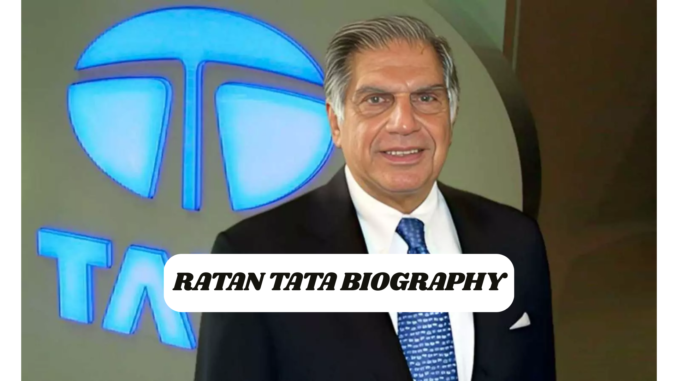
Ratan Tata is one of the most respected and admired business leaders in India and across the world. Known for his humility, integrity, and visionary leadership, he transformed the Tata Group into a global powerhouse while maintaining strong ethical values. His life story is not just about business success but also about compassion, innovation, and dedication to national development.
Born into one of India’s most prominent industrial families, Ratan Tata could have easily lived a life of privilege and comfort. Instead, he chose a path of responsibility, service, and leadership that reshaped Indian industry. His journey reflects resilience, patience, and an unwavering commitment to excellence.
Ratan Tata served as the Chairman of Tata Sons from 1991 to 2012 and later as Interim Chairman from 2016 to 2017. During his tenure, the Tata Group expanded internationally and acquired iconic global brands such as Jaguar Land Rover, Tetley, and Corus Steel. These bold decisions placed India firmly on the global business map.
Beyond business, Ratan Tata is also known for his philanthropy. A large portion of Tata Group profits goes to charitable trusts supporting education, healthcare, rural development, and scientific research. His leadership style blended profitability with purpose, making him a role model for ethical capitalism.
Bio Data
- Full Name: Ratan Naval Tata
- Born: December 28, 1937
- Age: 88 years old (as of 2026)
- Birthplace: Bombay (now Mumbai), Maharashtra, India
- Nationality: Indian
- Occupation: Industrialist, Philanthropist, Former Chairman of Tata Sons
- Religion: Zoroastrian (Parsi)
- Parents: Naval Tata (father), Sooni Tata (mother)
- Siblings: Noel Tata (half-brother), Aloo Mistry (half-sister), Maya Tata (half-sister)
- Relationship: Single
- Net Worth: Estimated around $1 billion
Early Life and Family Background
Ratan Naval Tata was born on December 28, 1937, in Bombay (now Mumbai), India. He belonged to the famous Tata family, known for building one of India’s oldest and most trusted business empires. However, his childhood was not without challenges. His parents, Naval Tata and Sooni Tata, separated when he was young, and he was raised by his grandmother, Lady Navajbai Tata.
Lady Navajbai played a significant role in shaping Ratan Tata’s values and character. She instilled in him discipline, kindness, and a strong sense of responsibility. Growing up in a household that emphasized service to society, Ratan Tata developed an early understanding that wealth and power must be used for the greater good.
Despite his privileged background, he was a shy and sensitive child. He often spoke about being bullied at school and how these experiences taught him resilience and humility. These early life challenges helped mold his calm and composed personality later in life.
Education and Academic Journey
Ratan Tata completed his schooling in Mumbai and later moved to the United States for higher education. He studied architecture at Cornell University, where he earned a Bachelor’s degree in Architecture with Structural Engineering.
Unlike many business heirs who are trained only in management, Ratan Tata’s background in architecture gave him a strong sense of design, structure, and innovation. This creative mindset later influenced several Tata projects, including the design-focused approach to automobiles and real estate.
After completing his degree, he briefly worked in Los Angeles but eventually returned to India to join the Tata Group in 1962. His decision to start from the bottom showed his commitment to learning the business from the ground up.
Early Career in the Tata Group
Ratan Tata began his career on the shop floor of Tata Steel in Jamshedpur, where he worked alongside blue-collar workers, shoveling limestone and handling heavy equipment. This experience gave him a deep respect for workers and a clear understanding of industrial operations.
Unlike many heirs who take up leadership roles immediately, Ratan Tata chose to learn every aspect of the business. He rotated through different Tata companies, gaining hands-on experience in management, operations, and production.
These formative years built his credibility and strengthened his leadership skills. He learned that true leadership comes from understanding people at every level of an organization.
Becoming Chairman of Tata Group
In 1991, Ratan Tata became the Chairman of Tata Sons, succeeding J.R.D. Tata. At that time, the Tata Group was a collection of loosely connected companies. Ratan Tata faced resistance from senior executives who were used to independence and authority.
Despite these challenges, he introduced a more centralized and modernized structure. He emphasized accountability, transparency, and performance. His vision was to make Tata a unified global brand rather than just a group of Indian companies.
His early years as chairman were difficult, but his patience and determination paid off. He invested heavily in technology, innovation, and international expansion.
Transforming Tata into a Global Brand
One of Ratan Tata’s greatest achievements was transforming the Tata Group into a global business empire. He led several landmark acquisitions that brought international recognition to Indian industry.
Some major acquisitions under his leadership include:
- Tetley Tea (2000)
- Corus Steel (2007)
- Jaguar Land Rover (2008)
These acquisitions were bold and risky but proved to be visionary decisions. Jaguar Land Rover, in particular, became one of the most profitable companies under Tata ownership.
Through these moves, Ratan Tata showed the world that Indian companies could compete at the highest global level.
The Tata Nano Project: A Car for the Common Man
One of Ratan Tata’s most ambitious and emotional projects was the Tata Nano. His dream was to create a safe, affordable car for Indian families who could only afford two-wheelers. He believed every family deserved a secure means of transportation.
The idea was inspired when he saw an entire family riding on a scooter in heavy rain. That image stayed with him and motivated him to build a car that cost around ₹1 lakh, which was unheard of in the automobile industry.
When the Tata Nano was launched in 2008, it was celebrated worldwide as the “world’s cheapest car.” Although it faced market challenges due to perception and production issues, the Nano remains a symbol of Ratan Tata’s innovative spirit and commitment to social impact.
It showed his courage to attempt the impossible and his willingness to take risks not just for profit, but for people.
Leadership Style and Values
Ratan Tata is admired for his quiet, ethical, and humble leadership style. He never believed in authoritarian control. Instead, he empowered leaders within the Tata Group and encouraged innovation.
Key values that define his leadership:
- Integrity
- Simplicity
- Compassion
- Long-term thinking
- Social responsibility
He often said that business should not only focus on profits but also on creating a positive impact on society. This philosophy shaped Tata Group’s reputation as one of the most ethical business houses in the world.
Philanthropy and Social Contributions
More than 65% of Tata Sons is owned by charitable trusts, which makes the Tata Group one of the most philanthropic business organizations globally. Under Ratan Tata’s leadership, billions of dollars were invested in:
- Education
- Healthcare
- Rural development
- Scientific research
- Disaster relief
Some notable contributions include:
- Funding the Tata Institute of Social Sciences
- Supporting cancer hospitals
- Providing scholarships to students worldwide
- Building infrastructure for underprivileged communities
Ratan Tata personally donated large sums to causes such as animal welfare, COVID-19 relief, and medical research.
Awards and Honors
Ratan Tata has received numerous awards for his contribution to industry and society:
- Padma Bhushan (2000)
- Padma Vibhushan (2008)
- Honorary knighthood by the UK
- Carnegie Medal of Philanthropy
- Numerous global business leadership awards
These honors recognize not only his business success but also his humanitarian values.
Personal Life
Ratan Tata never married and does not have children. He has spoken openly about coming close to marriage multiple times but circumstances prevented it.
He lives a simple life and is known for his love of dogs. He has adopted many stray animals and supports animal welfare organizations.
Despite being one of India’s most powerful industrialists, he prefers a quiet and private lifestyle.
Net Worth
Ratan Tata’s personal net worth is estimated to be around $1 billion. However, unlike many billionaires, much of his wealth is tied to charitable trusts. His true legacy lies not in personal wealth but in societal impact.
Legacy
Ratan Tata’s legacy is that of a visionary who proved that business success and ethical values can coexist. He transformed the Tata Group into a global brand while preserving its humanitarian mission.
He inspired generations of entrepreneurs to pursue profit with purpose. His life is a reminder that leadership is about service, not power.
FAQs
1. Who is Ratan Tata?
Ratan Tata is an Indian industrialist and former Chairman of Tata Group, known for transforming it into a global business empire.
2. When was Ratan Tata born?
He was born on December 28, 1937.
3. What is Ratan Tata’s net worth?
His estimated net worth is around $1 billion.
4. Is Ratan Tata married?
No, he never married.
5. What are Ratan Tata’s major achievements?
Global expansion of Tata Group, acquisition of Jaguar Land Rover, Tata Nano project, and major philanthropic initiatives.
6. Why is Ratan Tata admired?
For his integrity, humility, ethical leadership, and philanthropy.
Conclusion
Ratan Tata is not just a business icon; he is a symbol of ethical leadership and national pride. His journey shows that success is meaningful only when it uplifts society. He built global businesses while touching millions of lives through compassion and generosity.
His story will continue to inspire generations of leaders who believe that business can be a force for good.
Leave a Reply