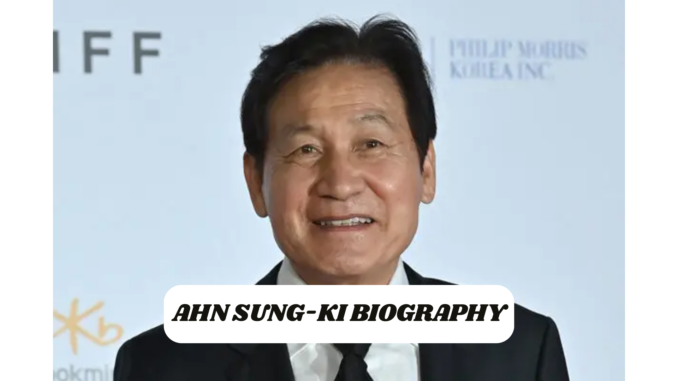
Ahn Sung-ki is widely regarded as one of the greatest and most respected actors in South Korean cinema history. With a career spanning over six decades, he has become a cultural icon whose work shaped the modern Korean film industry. Known for his versatility, depth, and emotional authenticity, Ahn Sung-ki is often called “the nation’s actor” in South Korea. His influence extends beyond acting, as he has also served as a symbol of artistic integrity and professionalism in Asian cinema.
Born during a time of national rebuilding, Ahn Sung-ki’s life story mirrors the transformation of South Korea itself. From his early childhood roles to his internationally acclaimed performances, his career is a testament to dedication, resilience, and artistic excellence.
Bio Data
Early Life and Childhood Acting Career
Ahn Sung-ki was born on January 1, 1952, in Seoul, South Korea. Interestingly, his journey into acting began at a very young age. He made his debut as a child actor in the 1950s, appearing in numerous films during Korea’s post-war cinema boom. At a time when the film industry was rebuilding, young Ahn became one of the most recognizable child faces on screen.
As a child actor, he appeared in more than 60 films, showcasing natural talent and emotional intelligence beyond his years. Unlike many child stars who fade away with time, Ahn Sung-ki’s early exposure laid a strong foundation for his later success. His childhood experiences in film helped him understand storytelling, character development, and audience connection from an early age.
However, unlike many who stay in the spotlight, Ahn took a break from acting during his teenage years to focus on his education. This decision reflected his disciplined nature and commitment to personal growth.
Education and Return to Acting
Ahn Sung-ki attended Hankuk University of Foreign Studies, where he studied English Literature. His academic background contributed to his intellectual depth and refined approach to character portrayal. After completing his studies, he returned to acting in the late 1970s as an adult actor.
This transition was not easy. Moving from child actor to adult roles required patience, persistence, and a willingness to reinvent himself. His comeback film, “The Soldiers” (1984), marked the beginning of his successful adult acting career.
From this point onward, Ahn Sung-ki established himself as a serious actor capable of delivering powerful and emotionally rich performances.
Breakthrough and Rise to Stardom
The turning point in Ahn Sung-ki’s career came in the late 1980s and early 1990s when South Korean cinema began experiencing a renaissance. He starred in critically acclaimed films that addressed historical, political, and humanistic themes.
Some of his most iconic early roles include:
- “Mandala” (1981) – A philosophical drama that explored Buddhism and human suffering.
- “Gilsoddeum” (1986) – A powerful portrayal of divided families after the Korean War.
- “Chilsu and Mansu” (1988) – A landmark film that depicted the struggles of working-class youth.
These films established Ahn Sung-ki as a serious and socially conscious actor. His performances resonated with audiences because they reflected real emotions and struggles faced by everyday people.
Filmography Highlights
Ahn Sung-ki’s career includes an impressive list of films that span multiple genres:
- Taebaek Mountains (1994)
- Black Republic (1990)
- Art Museum by the Zoo (1998)
- Nowhere to Hide (1999)
- Silmido (2003)
- Radio Star (2006)
- Unbowed (2012)
In each of these films, Ahn demonstrated his ability to transform into diverse characters, from soldiers and professors to artists and politicians.
International Recognition
Ahn Sung-ki is not only respected in South Korea but also admired internationally. He has served as a jury member at prestigious film festivals, including the Cannes Film Festival. His global recognition helped elevate Korean cinema on the world stage long before the “Korean Wave” became mainstream.
His performances are praised for their authenticity and emotional depth, making him a bridge between Korean cinema and international audiences.
Awards and Achievements
Ahn Sung-ki holds a record number of Best Actor awards in South Korea. He has won multiple Grand Bell Awards, Blue Dragon Film Awards, and Baeksang Arts Awards.
Some of his notable honors include:
- Multiple Best Actor Awards
- Lifetime Achievement Awards
- Cultural Merit Award from the South Korean government
These awards reflect not only his acting talent but also his long-lasting contribution to national culture.
Acting Style and Influence
Ahn Sung-ki’s acting style is defined by subtlety and emotional realism. He does not rely on exaggerated expressions or dramatic gestures. Instead, he conveys powerful emotions through quiet strength and authenticity.
Younger actors in Korea often cite Ahn Sung-ki as a role model. His professionalism, humility, and dedication continue to inspire new generations.
Personal Life
Ahn Sung-ki is known for maintaining a private and modest lifestyle. Unlike many celebrities, he avoids unnecessary publicity and focuses on meaningful work. This humility has contributed to his respected public image.
Legacy and Cultural Impact
Ahn Sung-ki is more than just an actor; he is a symbol of Korean cinema’s evolution. From black-and-white films to modern digital productions, his career spans every major phase of South Korean filmmaking history.
His work helped shape storytelling standards and raised expectations for acting excellence. Today, he is remembered not only as a performer but as a guardian of artistic integrity.
FAQs
Q1: Who is Ahn Sung-ki?
Ahn Sung-ki is a legendary South Korean actor known for his decades-long career and numerous award-winning performances.
Q2: When was Ahn Sung-ki born?
He was born on January 1, 1952, in Seoul, South Korea.
Q3: Why is Ahn Sung-ki called “the nation’s actor”?
Because of his immense contribution to Korean cinema and his respected reputation for excellence and humility.
Q4: What are his most famous movies?
Some of his famous films include Chilsu and Mansu, Silmido, Radio Star, and Unbowed.
Q5: Has Ahn Sung-ki won awards?
Yes, he has won numerous Best Actor awards and Lifetime Achievement Awards.
Conclusion
Ahn Sung-ki’s biography is a story of talent, perseverance, and artistic dedication. From a child actor to a national icon, his journey reflects the history and growth of Korean cinema itself. His performances continue to touch hearts, educate minds, and inspire future generations. Without a doubt, Ahn Sung-ki remains one of the greatest actors in Asian film history.
Leave a Reply