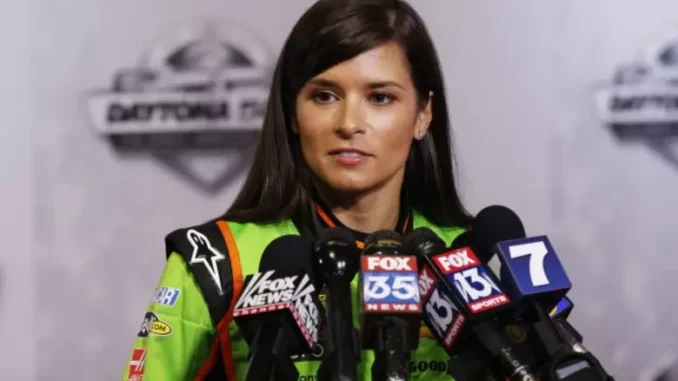
Danica Sue Patrick is one of the most influential figures in the history of American motorsports. Known for breaking barriers in a male-dominated industry, she became the most successful woman in the history of American open-wheel racing. From IndyCar to NASCAR, Danica Patrick’s career reshaped perceptions of women in professional racing and inspired a new generation of female athletes worldwide.
This detailed Danica Patrick biography explores her early life, racing journey, major achievements, business ventures, media presence, and lasting legacy.
Early Life and Background
Danica Patrick was born on March 25, 1982, in Beloit, Wisconsin, USA. Raised in a family that supported her athletic ambitions, she developed an interest in racing at a very young age. Her parents, Terry and Beverly Patrick, owned a coffee shop and were deeply involved in her early racing career, traveling across the country to support her competitions.
Danica began go-kart racing at just 10 years old. Her natural talent quickly became apparent as she won several regional championships. By her teenage years, she had already established herself as a serious competitor, often racing against boys and outperforming many of them.
Racing Education and Move to Europe
To sharpen her skills, Danica Patrick moved to England in the late 1990s to compete in Formula racing series. This decision played a critical role in shaping her professional career. While in Europe, she raced in Formula Ford, Formula Vauxhall, and Formula Renault, gaining valuable experience on international tracks.
Her European racing years helped refine her technical driving abilities and mental toughness, preparing her for the high-pressure environment of elite motorsports. Despite modest results compared to her American success, the experience proved invaluable.
IndyCar Career Breakthrough
Danica Patrick returned to the United States in 2002 and joined the IndyCar Series. In 2005, she made history at the Indianapolis 500 by becoming the first woman to lead laps in the iconic race. She finished fourth overall, the highest finish ever by a female driver at the time.
Her biggest breakthrough came in 2008 when she won the Indy Japan 300. This victory made her the first woman to win an IndyCar Series race, cementing her place in motorsports history.
Notable IndyCar Achievements
- First woman to win an IndyCar race
- Highest finishing female driver at the Indianapolis 500 (3rd place in 2009)
- Multiple top-10 season finishes
- IndyCar Most Popular Driver award recipient
Danica’s success attracted massive media attention, helping IndyCar reach broader audiences.
Transition to NASCAR
In 2010, Danica Patrick announced her transition to NASCAR, one of the most competitive and physically demanding racing series in the world. She initially competed part-time while still racing in IndyCar, before making a full-time switch.
In 2013, she made history once again by becoming the first woman to win a NASCAR Cup Series pole position at the Daytona 500. She later achieved her best NASCAR Cup Series finish, a sixth-place result at Atlanta Motor Speedway in 2014.
Although she did not secure a NASCAR race win, her presence significantly boosted viewership, sponsorship interest, and female participation in motorsports.
Challenges and Criticism
Despite her achievements, Danica Patrick faced intense scrutiny throughout her career. Critics often focused on her lack of race wins in NASCAR rather than acknowledging the difficulty of competing at the highest levels.
She also dealt with gender bias, media pressure, and unrealistic expectations. However, Danica consistently emphasized perseverance, professionalism, and personal growth, becoming a symbol of resilience in sports.
Retirement from Racing
Danica Patrick officially retired from professional racing in 2018. Her final races included the Daytona 500 and the Indianapolis 500, bringing her career full circle.
Upon retirement, she shifted her focus toward business, media, and personal development, successfully reinventing herself beyond the racetrack.
Business Ventures and Media Career
After retiring, Danica Patrick became a successful entrepreneur. She launched her own wine brand, fashion collections, and health-focused businesses. She also authored a book emphasizing wellness, fitness, and mental clarity.
Danica transitioned into broadcasting, serving as a motorsports analyst and television personality. She gained recognition for her insightful commentary and polished on-screen presence.
Personal Life and Interests
Danica Patrick is known for her interest in fitness, yoga, and holistic wellness. She openly discusses mental health, mindfulness, and personal growth, resonating with audiences beyond racing fans.
Her personal relationships and lifestyle choices have frequently attracted media attention, but she continues to prioritize independence and self-improvement.
Legacy and Impact
Danica Patrick’s legacy extends far beyond race statistics. She shattered long-standing gender barriers and proved that women could compete at the highest levels of motorsports.
Her influence paved the way for increased female participation in racing, from grassroots karting to professional circuits. Danica remains a powerful symbol of courage, ambition, and determination.
FAQs About Danica Patrick
Who is Danica Patrick?
Danica Patrick is a retired American professional race car driver known for her success in IndyCar and NASCAR.
What is Danica Patrick famous for?
She is famous for being the first woman to win an IndyCar race and the first woman to earn a NASCAR Cup Series pole position.
Did Danica Patrick win a NASCAR race?
No, she did not win a NASCAR Cup Series race, but she achieved multiple top-10 finishes.
When did Danica Patrick retire?
She retired from professional racing in 2018.
What does Danica Patrick do now?
She works as a businesswoman, author, wellness advocate, and television analyst.
Conclusion
Danica Patrick’s journey is a remarkable story of determination, resilience, and trailblazing success. From her early karting days to becoming a global motorsports icon, she challenged stereotypes and redefined what was possible for women in racing. Her legacy continues to inspire athletes, entrepreneurs, and fans worldwide, proving that courage and commitment can break even the toughest barriers.
Leave a Reply