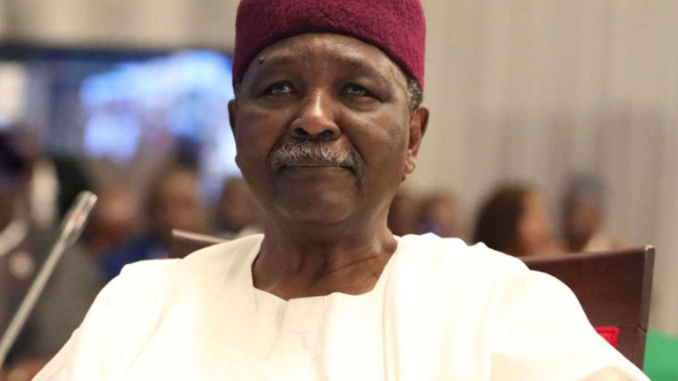
Yakubu Dan-Yumma Gowon is one of the most significant figures in Nigerian history, remembered as the country’s youngest Head of State and the leader who presided over Nigeria during its most turbulent period—the Nigerian Civil War. His leadership style, emphasis on national unity, and post-war reconciliation policies have left a lasting mark on Nigeria’s political and social landscape.
Born in the era of colonial rule and rising to power at a young age, Gowon’s story is deeply intertwined with Nigeria’s journey from colonialism to independence, military rule, and the struggle to maintain national unity. This biography explores his early life, military career, time in power, achievements, controversies, and enduring legacy.
Early Life and Background
Yakubu Gowon was born on October 19, 1934, in Pankshin, located in present-day Plateau State, Nigeria. He was born into a Christian family belonging to the Angas ethnic group. His parents were missionaries, which exposed him early to discipline, education, and strong moral values.
Gowon’s early education took place in Northern Nigeria, where he showed exceptional academic ability. He attended Government College, Zaria, one of the most prestigious secondary schools in Nigeria at the time. His performance there laid the foundation for his future career in the military.
Military Training and Career
In 1954, Yakubu Gowon joined the Nigerian Army, then part of the British colonial military structure. He received military training in Nigeria and later in the United Kingdom, including attendance at the Royal Military Academy, Sandhurst.
Gowon steadily rose through the ranks due to his discipline, intelligence, and professionalism. By the mid-1960s, Nigeria was experiencing deep political instability, ethnic tensions, and power struggles, all of which would soon place Gowon at the center of national events.
Rise to Power
Yakubu Gowon became Nigeria’s Head of State on August 1, 1966, at the age of 31, making him the youngest leader in the country’s history. His emergence followed a counter-coup that removed Major General Johnson Aguiyi-Ironsi from power.
At the time, Nigeria was deeply divided along ethnic and regional lines. The country was struggling with mistrust between the Northern, Western, and Eastern regions, and the military itself was not immune to these tensions. Gowon was chosen partly because he was perceived as a neutral figure who could unite the armed forces and the nation.
Leadership During the Nigerian Civil War
One of the defining chapters of Yakubu Gowon’s biography is his leadership during the Nigerian Civil War (1967–1970). The conflict began when the Eastern Region, under the leadership of Chukwuemeka Odumegwu Ojukwu, declared itself the independent Republic of Biafra.
The war was devastating, resulting in massive loss of life, economic disruption, and international attention. As Head of State, Gowon led the federal government’s effort to preserve Nigeria’s unity. His administration argued that allowing secession would destabilize the entire African continent.
Despite the brutality of the war, Gowon is often remembered for his post-war approach, encapsulated in his famous declaration of “No victor, no vanquished.” This philosophy emphasized reconciliation, rehabilitation, and reconstruction rather than revenge.
Creation of States and Administrative Reforms
One of Gowon’s most significant achievements was the creation of new states. In 1967, he broke Nigeria’s four regions into 12 states, a move designed to reduce ethnic dominance and weaken secessionist tendencies.
This restructuring helped bring government closer to the people and laid the foundation for Nigeria’s current federal system. Many analysts consider this decision a turning point in Nigeria’s political development.
Economic Policies and Development Efforts
Yakubu Gowon ruled during the early years of Nigeria’s oil boom. His administration benefited from rising oil revenues, which funded ambitious development projects. These included infrastructure expansion, educational institutions, and healthcare initiatives.
Gowon also launched the National Youth Service Corps (NYSC) in 1973. The program was designed to promote national unity by requiring young Nigerian graduates to serve in states other than their own. Today, the NYSC remains one of the most enduring legacies of his government.
Foreign Policy and Pan-Africanism
On the international stage, Gowon was a strong advocate of African unity and independence. He played an active role in the Organization of African Unity (OAU) and supported liberation movements across Africa.
Nigeria under Gowon became a respected voice in African and global affairs. His government promoted non-alignment during the Cold War and sought to position Nigeria as a leader on the African continent.
Challenges and Criticisms
Despite his achievements, Yakubu Gowon’s administration faced significant criticism. Allegations of corruption, slow transition to civilian rule, and economic mismanagement began to surface in the early 1970s.
Although Gowon promised a return to civilian government, delays in implementing this plan led to growing dissatisfaction within the military and the general population.
Overthrow and Exile
On July 29, 1975, Yakubu Gowon was overthrown in a bloodless military coup while attending an OAU summit in Uganda. Brigadier Murtala Mohammed took over as Head of State.
Following his removal from power, Gowon went into exile in the United Kingdom, where he pursued further education. He later earned a doctorate degree in political science, demonstrating his lifelong commitment to learning.
Life After Power
After years in exile, Gowon returned to Nigeria and largely withdrew from active politics. He dedicated his post-leadership years to peacebuilding, diplomacy, and humanitarian work.
He founded the Yakubu Gowon Centre, an organization focused on conflict resolution, youth development, and national unity. Through this platform, Gowon has continued to influence Nigeria positively without holding political office.
Legacy and Historical Significance
Yakubu Gowon’s legacy is complex and multifaceted. He is remembered as a unifier who kept Nigeria together during its most dangerous moment, as well as a leader whose good intentions sometimes fell short in execution.
His emphasis on reconciliation after the civil war, creation of states, establishment of the NYSC, and promotion of African unity remain central to his historical reputation. For many Nigerians, Gowon symbolizes moderation, humility, and a commitment to national unity.
FAQs About Yakubu Gowon
Who is Yakubu Gowon?
Yakubu Gowon is a former Nigerian military leader who served as Head of State from 1966 to 1975.
How old was Yakubu Gowon when he became Head of State?
He was 31 years old, making him Nigeria’s youngest Head of State.
What is Yakubu Gowon best known for?
He is best known for leading Nigeria during the Civil War and promoting post-war reconciliation.
Did Yakubu Gowon fight in the Nigerian Civil War?
Yes, he was the Head of State and Commander-in-Chief during the war.
Is Yakubu Gowon still alive?
Yes, Yakubu Gowon is still alive and remains involved in peace and unity initiatives.
Conclusion
Yakubu Gowon’s biography is a powerful reflection of leadership during crisis. Rising to power at a young age, he faced challenges that could have shattered Nigeria permanently. Through war, reconciliation, and reform, Gowon left an indelible mark on the nation’s history.
While debates about his leadership continue, his commitment to unity, peace, and national service ensures his place among Nigeria’s most influential leaders. His life story remains a valuable lesson in leadership, humility, and the complexities of governing a diverse nation.
Leave a Reply